
Meta Description: Looking for menopause treatment near me? Collective Aesthetics in Miramar, FL offers personalized hormone care near Pembroke Pines, Dania, Hialeah & more.
Menopause is a natural stage of life, but the symptoms that come with changing hormone levels can affect your sleep, energy, mood, comfort, and confidence. Hot flashes, night sweats, vaginal dryness, changes in libido, fatigue, and sleep disruption can make everyday life feel very different.
If you have been searching for menopause treatment near me, the goal should be more than simply finding a nearby clinic. You want experienced medical guidance, a treatment approach tailored to your symptoms and health history, and a provider who takes the time to understand what you are experiencing.
At Collective Aesthetics in Miramar, Florida, hormone replacement therapy is part of the clinic’s Functional Wellness services. The practice provides personalized hormone care for women experiencing hormonal changes associated with perimenopause and menopause.
What Is Menopause and Why Does It Cause Symptoms?
Menopause occurs when menstrual periods permanently stop because the ovaries have significantly reduced estrogen production. The transition leading up to menopause is called perimenopause and can last for several years.
During this transition, hormone levels can fluctuate considerably. Those changes may contribute to symptoms such as:
- Hot flashes and night sweats
- Sleep difficulties
- Vaginal dryness
- Pain or discomfort during sex
- Mood changes or irritability
- Fatigue
- Changes in sexual desire
- Difficulty concentrating or “brain fog”
- Changes in menstrual patterns during perimenopause
Not every woman experiences the same symptoms, and symptom severity can vary considerably. ACOG notes that hormone therapy can help relieve several menopause and perimenopause symptoms, particularly hot flashes and night sweats.

When Should You Consider Menopause Treatment?
You do not have to simply tolerate symptoms because menopause is a normal part of aging. If symptoms are interfering with your work, relationships, sleep, exercise, or general quality of life, it may be worth discussing treatment options with a qualified healthcare professional.
You may want to schedule a menopause consultation if you are experiencing:
- Frequent or intense hot flashes
- Night sweats that interfere with sleep
- Persistent fatigue
- Mood changes that feel unusual for you
- Vaginal dryness or discomfort
- Reduced sexual desire
- Sleep disruption
- Menstrual changes associated with perimenopause
- Multiple symptoms that began around the same time
Searching for menopause treatment near me is often the first step toward understanding whether your symptoms are related to menopause or another health concern.
A personalized evaluation is important because menopause symptoms can overlap with other medical conditions. Treatment should therefore be based on your symptoms, health history, medications, risk factors, and individual goals rather than a one-size-fits-all approach.
How Hormone Replacement Therapy May Help
Hormone replacement therapy, also called menopausal hormone therapy, can be used to relieve certain symptoms associated with declining hormone levels.
For appropriate patients, systemic estrogen therapy is considered one of the most effective treatments for hot flashes and night sweats. Estrogen can also help with vaginal symptoms and can help protect against bone loss during menopause.
Depending on an individual’s circumstances, hormone therapy may involve estrogen alone or estrogen combined with a progestogen. Women who still have a uterus generally need progestogen alongside systemic estrogen to reduce the risk of endometrial cancer.
Potential benefits may include:
- Fewer hot flashes and night sweats
- Improved comfort related to vaginal dryness
- Better sleep when symptoms are disrupting rest
- Relief from certain menopause-related symptoms
- Protection against some menopause-related bone loss
- Improved overall quality of life for appropriately selected patients
However, hormone therapy is not suitable for everyone, and treatment decisions should always be individualized.
Menopause Treatment Near Me: What Happens During a Consultation?
When looking for menopause treatment near me, understanding the consultation process can make the experience feel much easier.
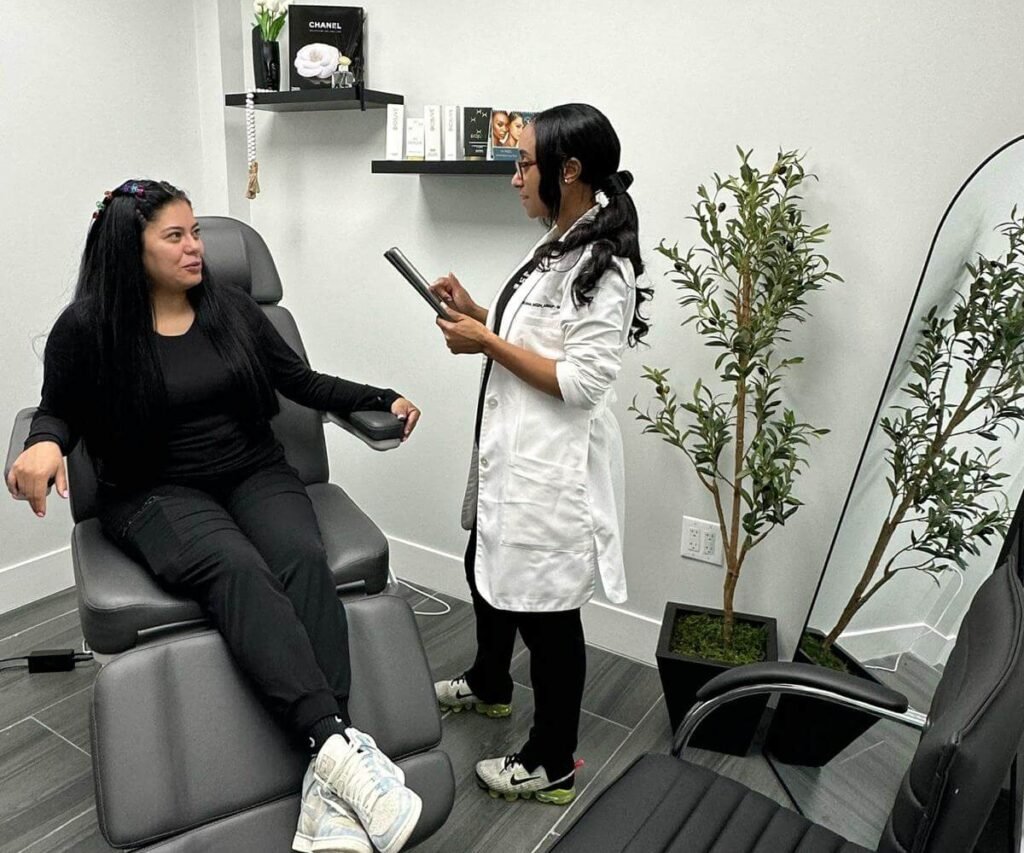
At Collective Aesthetics, the approach to hormone care is personalized. The clinic describes its hormone replacement therapy process as beginning with a consultation and evaluation, followed by development of an individualized treatment plan and ongoing monitoring.
1. Discuss Your Symptoms
Your provider will want to understand what has changed and how those changes are affecting your daily life.
You may discuss your:
- Menstrual history
- Hot flashes and night sweats
- Sleep quality
- Mood and energy
- Sexual wellness
- Vaginal symptoms
- Current medications and supplements
- Personal and family medical history
Being open about symptoms—even those that feel uncomfortable to discuss—can help your provider make a more informed treatment decision.
2. Review Your Health History
Your medical history is an important part of determining whether hormone therapy is appropriate.
Certain conditions can make systemic hormone therapy unsuitable or require additional evaluation. ACOG, for example, identifies a history of breast or endometrial cancer, stroke, heart attack, blood clots, or liver disease among circumstances in which systemic hormone therapy is generally not recommended.
3. Create an Individualized Plan
There is no universal menopause treatment that works for every woman.
Your provider can discuss appropriate options based on your symptoms, medical history, preferences, and treatment goals. Hormone therapy can be delivered in different ways, including tablets, patches, gels, sprays, or localized vaginal options depending on the clinical situation.
4. Monitor Your Progress
Menopause care should not end after your first treatment decision. Your symptoms and health needs can change over time.
Regular follow-up allows your provider to evaluate how you are responding, discuss side effects or concerns, and determine whether your treatment remains appropriate.

Do You Need Hormone Testing for Menopause?
Hormone testing is often discussed when women search for menopause treatment near me, but testing is not automatically necessary for diagnosing typical menopause symptoms.
According to ACOG’s current patient guidance, routine hormone testing is generally not recommended before starting hormone therapy for typical menopausal symptoms because hormone levels can fluctuate substantially during the menopause transition. Diagnosis and treatment decisions can often be based on symptoms, menstrual changes, and medical history.
That does not mean laboratory testing is never useful. Your healthcare provider may recommend specific tests when your symptoms or medical history suggest another condition should be investigated.
The important point is that testing and treatment should be clinically appropriate rather than performed simply because a test is available.
Is Hormone Replacement Therapy Safe?
Safety is one of the most important considerations when evaluating menopause treatment.
Hormone therapy can be appropriate for many women, but it has potential risks. Those risks vary according to factors such as age, the type of therapy, dose, route of administration, personal medical history, and when treatment is started.
Potential risks can include blood clots, stroke, gallbladder disease, and certain cancer risks depending on the therapy used. Combined estrogen-progestin therapy is associated with a small increased risk of breast cancer, while estrogen without appropriate progestogen in a woman with a uterus can increase the risk of endometrial cancer.
This is why personalized medical assessment matters.
It is also important to distinguish FDA-approved hormone products from compounded hormone preparations. ACOG recommends FDA-approved hormone therapy over compounded hormone therapy because compounded products are not subject to the same FDA approval standards for safety, effectiveness, and quality.
Lifestyle Support During Menopause
Menopause treatment does not have to focus on medication alone. Healthy lifestyle habits can support your overall well-being and complement medically appropriate treatment.
Helpful habits may include:
- Regular resistance and weight-bearing exercise
- A balanced, nutrient-dense diet
- Consistent sleep routines
- Stress-management practices
- Limiting personal triggers for hot flashes
- Avoiding tobacco
- Maintaining regular preventive healthcare visits
- Staying socially connected and emotionally supported
Hormone therapy should also not be viewed as a weight-loss treatment. ACOG notes that hormone therapy by itself does not cause weight loss, although improving symptoms such as night sweats may indirectly support better sleep and weight management.
Why Choose Collective Aesthetics for Menopause Care in Miramar?
Collective Aesthetics combines aesthetic services with Functional Wellness treatments, including hormone replacement therapy. The clinic is located at 6229 Miramar Pkwy Ste 7, Miramar, FL 33023 and provides personalized wellness care under the leadership of Amparo Robles, MSN, FNP-BC.
The clinic’s approach emphasizes individualized hormone care rather than treating every patient with the same protocol.
For women considering menopause treatment near me, convenient access is another advantage. Collective Aesthetics serves women in Miramar and surrounding communities, including:
The clinic also offers hormone replacement therapy for women experiencing hormonal changes associated with perimenopause and menopause.
Finding the Right Menopause Treatment Near Me
A Google search can show dozens of menopause clinics, hormone specialists, and wellness practices. The closest provider is not necessarily the right provider for your needs.
When comparing menopause treatment near me, consider whether the clinic:
- Provides personalized medical consultations
- Reviews your complete health history
- Explains both benefits and potential risks
- Offers appropriate treatment options
- Provides follow-up care
- Takes your symptoms and treatment goals seriously
- Uses medically appropriate hormone therapy
- Makes it comfortable to discuss sensitive symptoms
Menopause care should be a collaborative process. You should feel comfortable asking questions and understanding why a particular treatment is being recommended.

Personalized Menopause Care in Miramar, FL
If menopause symptoms are affecting how you sleep, work, exercise, or enjoy your everyday life, you do not have to navigate the transition without professional support.
At Collective Aesthetics, women in Miramar and surrounding South Florida communities can discuss their symptoms and wellness goals with a medical team that offers personalized hormone replacement therapy. The clinic’s hormone services are designed around individualized care and ongoing support.
If you have been searching for menopause treatment near me, Collective Aesthetics in Miramar, FL offers a convenient option for discussing your menopause and hormone-care needs. Schedule a consultation to learn whether hormone replacement therapy or another approach may be appropriate for you.
Related topic for
Hormone Replacement Therapy
- What Is Hormone Replacement Therapy (HRT) and How Does It Work?
- Top Benefits of Hormone Replacement Therapy for Women
- Bioidentical Hormones vs. Synthetic Hormones: Which Is Best?
- Common Myths and Facts About Hormone Replacement Therapy
- HRT for Men: Addressing Low Testosterone and Its Effects
- How Hormone Replacement Therapy Can Improve Your Quality of Life
- Is Hormone Replacement Therapy Safe? Debunking Safety Concerns
- Who Should Take HRT?
- HRT and Weight Loss: Does Hormonal Balance Help Shed Pounds?
- Hormone Replacement Therapy and Bone Health: Preventing Osteoporosis
- HRT for Perimenopause: What You Need to Know
- what are the signs that you need hormone replacement therapy
- Bioidentical Hormone Replacement Therapy (BHRT) vs. Traditional HRT: Which is Right for You?
- How Long Should You Stay on Hormone Replacement Therapy?