Causes of Hair Loss in Women: understand common triggers, treatment options, and when to seek care at Collective Aesthetics in Miramar, FL.
Hair loss can be frustrating, especially when you are unsure why your hair suddenly feels thinner, your part looks wider, or you are seeing more strands on your pillow or in the shower. The good news is that hair loss in women can have many different causes, and identifying the underlying reason is an important first step toward choosing the right approach.
At Collective Aesthetics in Miramar, FL, we provide personalized hair restoration services designed to support women experiencing thinning hair and hair loss. Our local clients include women from Pembroke Pines, Dania, Hialeah, Miami Lakes, Miami Gardens, Cooper City, and Hallandale, as well as surrounding South Florida communities.
Understanding the causes of hair loss in women can help you recognize changes earlier and seek appropriate professional guidance before the problem becomes more noticeable.
Why Does Hair Loss Happen in Women?
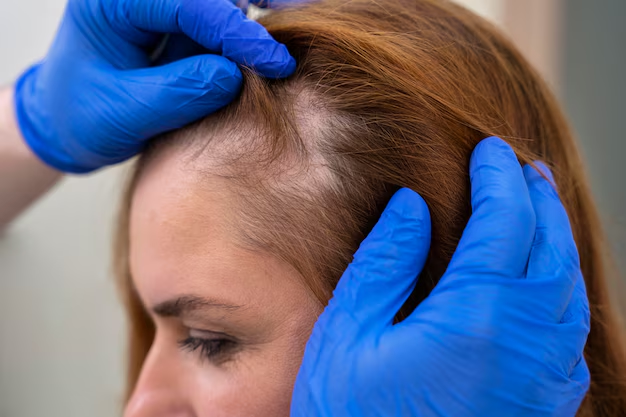
Hair naturally goes through cycles of growth, resting, and shedding. Losing some hair every day is normal. However, noticeable thinning, excessive shedding, bald patches, or a widening part may indicate that something has changed in the hair-growth cycle.
The causes of hair loss in women range from genetics and hormonal changes to stress, nutritional deficiencies, certain medical conditions, medications, and repeated damage from hairstyles or chemical treatments. The American Academy of Dermatology notes that hereditary hair loss is a common cause, while other conditions can produce temporary or potentially permanent hair loss.
Because different causes can look similar, it is important not to assume that every type of thinning hair requires the same treatment.
Common Causes of Hair Loss in Women
1. Female Pattern Hair Loss
Female pattern hair loss, also known as androgenetic or androgenic alopecia, is one of the most common reasons women experience progressive thinning. Genetics play an important role, and hormonal changes may also contribute.
Women often notice:
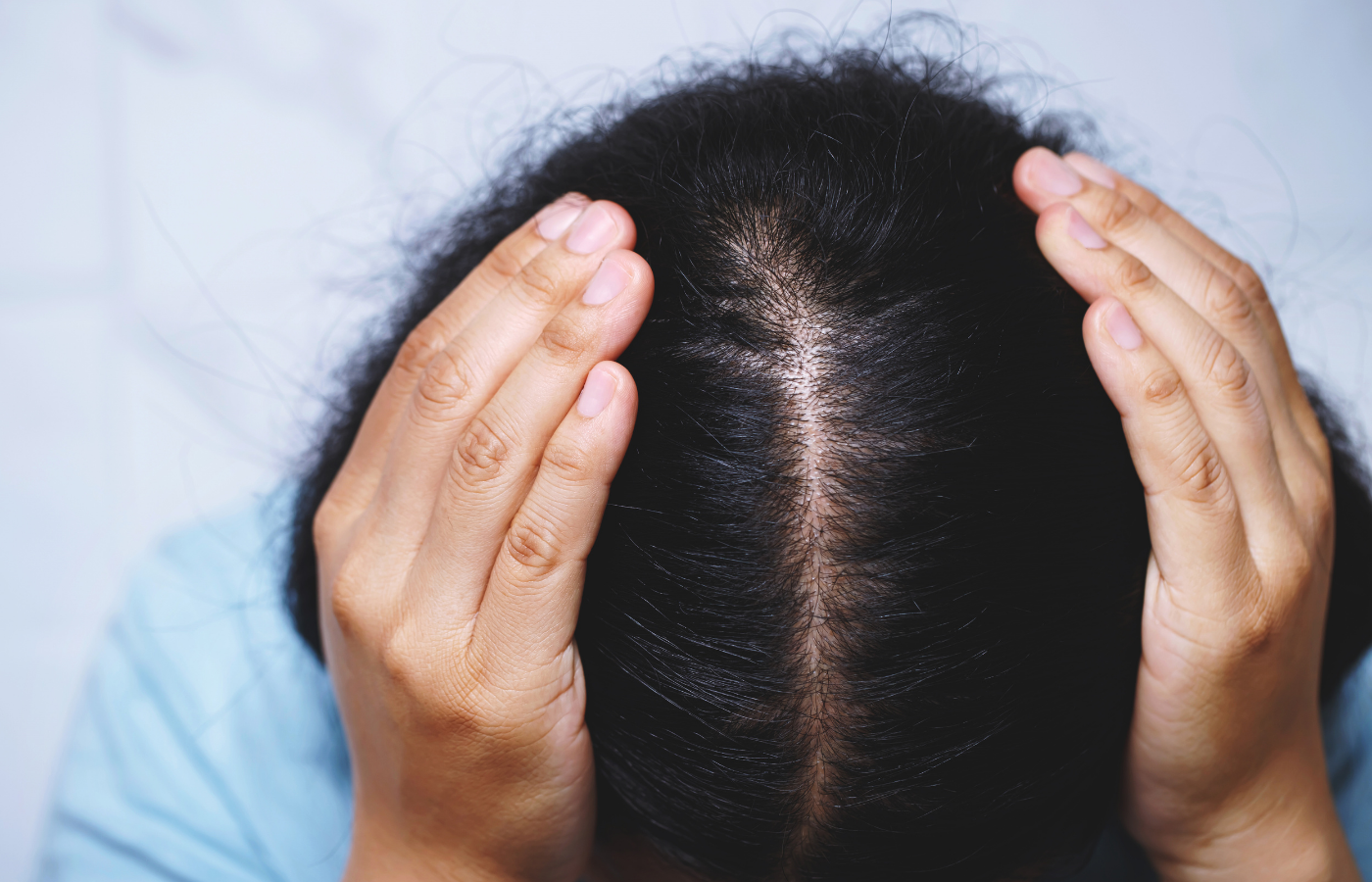
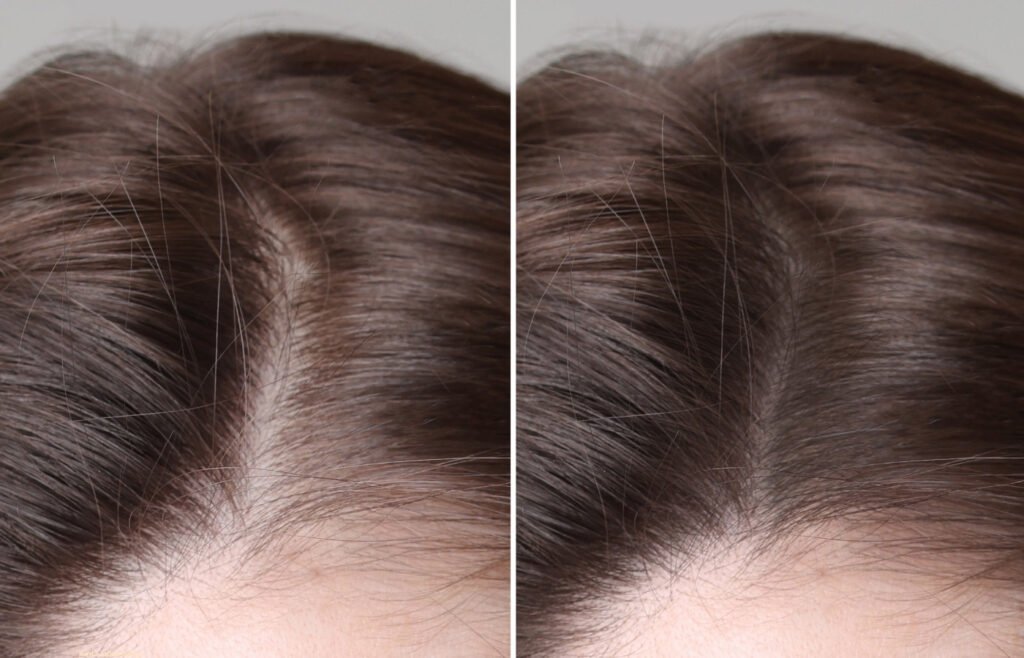
- A widening center part
- Less volume at the crown
- A thinner ponytail
- Gradual overall thinning
- Increased scalp visibility
Unlike some forms of sudden shedding, female pattern hair loss can progress gradually over time. Early evaluation may help determine whether treatment could slow progression or support healthier-looking hair.
2. Hormonal Changes
Hormones can have a significant effect on the hair-growth cycle. Women may notice changes in hair density during periods of hormonal fluctuation, including after pregnancy, around menopause, or with certain hormonal conditions.
Conditions such as polycystic ovary syndrome (PCOS) can also be associated with hair thinning. Changes in hormonal birth control may temporarily affect the hair cycle in some women.
If hair loss appears alongside other hormonal symptoms, discussing those changes with an appropriate healthcare professional can be an important part of finding the underlying cause.
3. Pregnancy and Postpartum Hair Shedding
Many women experience increased hair shedding several months after giving birth. This happens because pregnancy can alter the normal hair-growth cycle.
After delivery, more hairs may enter the shedding phase at approximately the same time. This can make hair loss appear dramatic, but postpartum shedding is often temporary. The American Academy of Dermatology reports that normal fullness commonly returns within several months as the hair cycle readjusts.
However, persistent or severe thinning should not automatically be attributed to postpartum changes. Other causes can occur at the same time.
4. Stress and Major Life Events
Physical or emotional stress can affect the hair-growth cycle. Significant illness, surgery, high fever, major emotional stress, or substantial changes in the body may trigger increased shedding.
This type of shedding is often called telogen effluvium. It may become noticeable weeks or months after the original stressor, which can make it difficult to connect the two.
When the underlying trigger resolves, hair may gradually return toward its previous fullness. However, ongoing stress can contribute to continued excessive shedding.
5. Nutritional Deficiencies
Your hair follicles require adequate nutrients to support normal growth. Low levels of certain nutrients can contribute to noticeable shedding or thinning.
Potential nutritional factors include insufficient:
The American Academy of Dermatology identifies inadequate intake of certain nutrients as a possible contributor to hair loss.
It is important not to assume that taking a hair supplement will solve the problem. Nutritional supplements are most appropriate when a deficiency or another specific need has been identified by a qualified healthcare professional.
6. Thyroid Problems
Thyroid disorders can affect many body functions, including the hair-growth cycle. Some women with thyroid disease notice generalized thinning or increased shedding.
Because thyroid-related hair loss may resemble other forms of hair thinning, determining whether an underlying thyroid issue is present may require medical evaluation and appropriate testing. Treating the underlying condition can sometimes improve the associated hair loss.
7. Certain Medications
Some medications can cause hair shedding as a side effect. The possibility depends on the medication, dose, individual response, and underlying health condition.
If you believe a medication may be contributing to your hair loss, speak with the healthcare professional who prescribed it. Do not stop a prescribed medication on your own, as doing so may create other health risks.
8. Tight Hairstyles and Traction
Repeated tension can contribute to a form of hair loss called traction alopecia. Frequently wearing very tight ponytails, buns, braids, extensions, or other styles that pull on the scalp may damage hair follicles over time.
Early traction-related thinning may improve when the source of tension is removed. Continued pulling, however, can potentially lead to permanent follicle damage.
9. Chemical and Heat Damage
Frequent coloring, relaxing, perming, bleaching, or excessive heat styling can weaken the hair shaft and increase breakage. This may make the hair appear thinner even when the primary issue is breakage rather than follicle-related hair loss.
Changing damaging hair-care habits can help reduce breakage. If you are experiencing true scalp-level thinning, however, it is important to investigate other possible causes as well.
10. Alopecia Areata and Other Scalp Conditions
Not all hair loss is gradual. Alopecia areata, an autoimmune condition, can cause round or irregular patches of hair loss. Other scalp disorders and inflammatory conditions may also cause shedding, scaling, irritation, or areas of reduced hair density.
Scarring forms of alopecia require particular attention because inflammation can permanently damage hair follicles. Early professional evaluation is important when hair loss is sudden, patchy, painful, itchy, inflamed, or accompanied by scalp changes.
How Can You Tell If Your Hair Loss Needs Attention?
It is normal to shed some hair every day. The concern is usually when you notice a clear change from your usual pattern.
Watch for signs such as:
- A noticeably wider hair part
- A thinner ponytail
- Increased scalp visibility
- Persistent excessive shedding
- Receding areas around the temples
- New bald patches
- Hair thinning that continues to progress
- Scalp redness, scaling, pain, or inflammation
The American Academy of Dermatology identifies widening parts and reduced ponytail fullness among common early signs of hair loss in women.
Why Identifying the Cause Matters
The causes of hair loss in women are not interchangeable. Hair shedding related to pregnancy may have a different course from hereditary hair loss, nutritional deficiency, traction, or an inflammatory scalp condition.
That is why simply purchasing a hair-growth product may not address the actual problem.
A professional assessment can help determine whether your concern appears consistent with hereditary thinning, excessive shedding, lifestyle-related factors, or another issue that may require medical evaluation.
If you have sudden or severe hair loss, significant scalp symptoms, or unexplained thinning, it is especially important to seek appropriate medical advice rather than delaying evaluation.
Hair Restoration at Collective Aesthetics
At Collective Aesthetics in Miramar, our hair restoration services include Platelet-Rich Plasma (PRP) therapy, a non-surgical approach designed to support hair restoration in areas affected by thinning or hair loss. The clinic describes PRP as using components of your own blood that are prepared and injected into targeted areas of the scalp.
PRP may be considered as part of a personalized hair restoration plan for appropriate candidates. However, it is important to understand that PRP is not a universal solution for every type of hair loss.
The American Academy of Dermatology notes that early research on platelet-rich plasma for female pattern hair loss is promising, while additional research is still needed to establish its effectiveness and safety more fully.
At Collective Aesthetics, the goal is to understand your concerns and discuss whether a hair restoration approach may be appropriate for your individual needs.
What to Expect From a Hair Restoration Consultation
A personalized consultation is an opportunity to discuss your hair concerns, timeline, and goals before deciding on treatment.
Depending on your situation, the process may include:
- Discussing when your hair loss or shedding began
- Reviewing changes in density, shedding, and hair pattern
- Discussing lifestyle, hormonal, nutritional, or medical factors
- Reviewing your hair-care and styling habits
- Assessing whether professional medical evaluation may be appropriate
- Discussing available hair restoration options
- Creating a personalized treatment plan when appropriate
This individualized approach is especially important because the causes of hair loss in women can vary considerably from one person to another.
Is PRP Hair Restoration Right for Every Woman?
PRP is not automatically appropriate for every woman experiencing hair loss. The best candidates depend on the type and pattern of hair loss, the condition of the scalp, individual health considerations, and treatment goals.
A consultation can help determine whether PRP should be considered as part of your hair restoration strategy.
You may also be advised to seek evaluation from a dermatologist or other medical professional if your symptoms suggest an underlying condition that requires diagnosis or treatment.
Taking the Next Step for Thinning Hair
Understanding the causes of hair loss in women is the first step toward making a more informed decision about your hair health. Genetics, hormones, stress, nutritional factors, medical conditions, medications, hairstyles, and scalp disorders can all play a role, and more than one factor may be involved.
If you are noticing persistent thinning, increased shedding, or changes in your hair density, you do not have to ignore the problem or rely on guesswork.
Collective Aesthetics in Miramar, FL offers personalized hair restoration services, including PRP hair restoration, for women seeking a professional approach to hair thinning. If you are located in Miramar, Pembroke Pines, Dania, Hialeah, Miami Lakes, Miami Gardens, Cooper City, Hallandale, or a nearby South Florida community, you can schedule a consultation to discuss your concerns and explore whether hair restoration treatment may be suitable for you.
Related topic for Hair Restoration Services
- The Ultimate Guide to Hair Restoration: Everything You Need to Know
- Top 5 Hair Restoration Treatments for Thinning Hair
- How to Choose the Right Hair Restoration Service for You
- Hair Transplant vs. Non-Surgical Hair Restoration: Which is Better?
- The Science Behind Hair Restoration: How Does It Actually Work?
- Hair Restoration Myths Debunked: What You Need to Know
- What to Expect Before, During, and After a Hair Restoration Procedure
- Laser Therapy for Hair Restoration: Is It Really Effective?
- How Long Does Hair Restoration Take to Show Results?
- The Cost of Hair Restoration: What Are Your Options?
- Natural vs. Surgical Hair Restoration: Which Option is Right for You?
- How Hair Restoration Can Boost Your Confidence and Self-Esteem
- The Best Hair Restoration Services for Men: A Complete Guide
- Women’s Guide to Hair Restoration: Solutions for Thinning and Balding
- How Hair Restoration Services Are Transforming the Way We Treat Hair LossAmerican Academy of Dermatology – Hair Loss
- Cleveland Clinic – Platelet-Rich Plasma (PRP)
- Mayo Clinic – Hair Loss
- National Library of Medicine – Platelet-Rich Plasma for Hair Loss
- American Society of Plastic Surgeons – Hair Loss Treatment