Learn when a Botox Touch-Up Appointment is appropriate and why timing matters. Serving Miramar, Pembroke Pines, Dania, Hialeah and nearby FL areas.
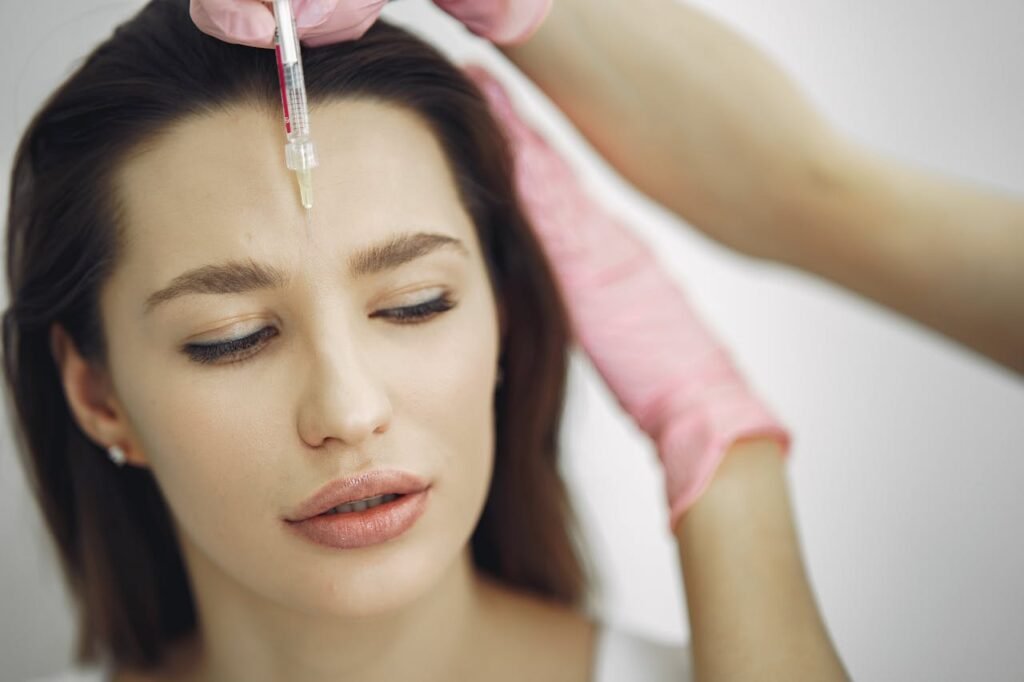
Botox is a popular non-surgical aesthetic treatment designed to soften the appearance of dynamic wrinkles caused by repeated facial movements. It is commonly used to address forehead lines, frown lines between the eyebrows, and crow’s feet around the eyes. While many people notice improvements within the first several days, the full results take time to develop.
A Botox Touch-Up Appointment: When Is It Appropriate? is a common question among people who want balanced, natural-looking results after their initial treatment. A touch-up may be appropriate when a qualified provider identifies a specific area that would benefit from a minor adjustment after the Botox has had enough time to take effect.
However, not every patient needs an additional treatment. Botox results vary depending on individual muscle activity, treatment areas, dosage, and personal response. That is why a follow-up assessment is an important part of responsible aesthetic care.
At Collective Aesthetics in Miramar, FL, we believe that every Botox treatment should be approached with attention to individual facial anatomy, aesthetic preferences, and realistic expectations. A follow-up consultation allows your provider to evaluate your results and determine whether any adjustment is appropriate.
What Is a Botox Touch-Up?
A Botox touch-up is a small, targeted treatment adjustment performed after the initial injections have had sufficient time to produce their effects. It is intended to address specific areas where muscle movement remains more noticeable than expected or where the initial result may benefit from refinement.
Botox works by temporarily reducing signals from nerves to targeted muscles. As those muscles relax, the appearance of expression-related wrinkles gradually softens.
Because this process takes time, providers generally avoid making immediate adjustments after the first appointment.
A touch-up may involve:
- Assessing whether targeted muscles have responded as expected.
- Identifying areas with remaining muscle movement.
- Evaluating whether facial symmetry needs further attention.
- Determining whether a small additional amount of Botox is appropriate.
- Reviewing whether the patient’s aesthetic goals have been achieved.
The objective is not to eliminate every facial movement. Instead, the goal is to create a refreshed appearance while preserving natural facial expression.
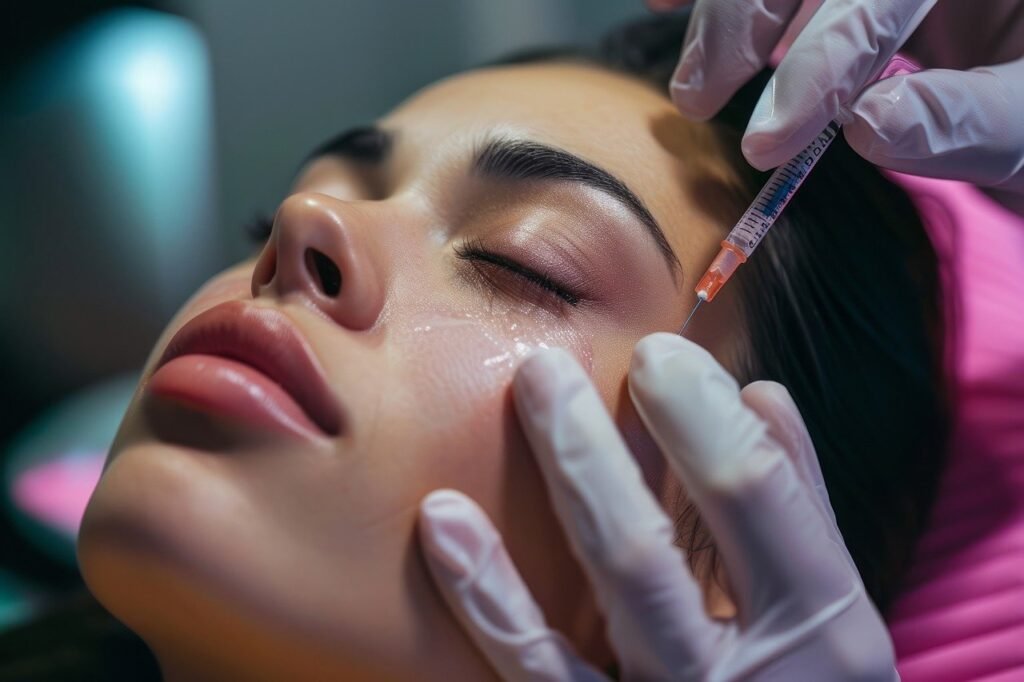
Botox Touch-Up Appointment: When Is It Appropriate?
Timing is one of the most important considerations when deciding whether an additional Botox treatment is necessary.
Most patients begin noticing changes within three to five days, although individual responses vary. Results typically continue developing over approximately 10 to 14 days. For this reason, a follow-up assessment is commonly scheduled around the two-week mark.
A Botox Touch-Up Appointment: When Is It Appropriate? depends on how the treated muscles have responded, whether the initial results are fully developed, and whether there is a specific concern that can reasonably be addressed.
1. When Some Muscle Movement Remains
One of the most common reasons for a follow-up assessment is persistent movement in a treated area.
For example, a patient who received Botox for forehead lines may notice that one section of the forehead still moves more noticeably than the surrounding area.
This does not automatically mean the original treatment was unsuccessful. Different facial muscles can respond differently to Botox, and some movement may be intentional to preserve a natural appearance.
Your provider can assess whether the remaining movement is expected or whether a minor adjustment may improve the overall result.
2. When Results Appear Uneven
Facial muscles are not always symmetrical. One eyebrow may naturally sit higher than the other, or one side of the face may have stronger muscle activity.
After Botox, these natural differences can sometimes become more noticeable.
A follow-up evaluation allows your provider to examine:
- Differences in eyebrow positioning.
- Uneven muscle activity.
- Variations in forehead movement.
- Differences in how expression lines respond.
- Overall facial balance.
If an adjustment is appropriate, the provider can discuss a targeted approach rather than automatically adding more product.
3. When the Initial Results Are Still Developing
Patience is important after Botox injections. Some patients expect immediate wrinkle reduction, but Botox does not produce instant results.
If you are considering an additional treatment only a few days after your appointment, it may be too early to determine whether you need one.
Waiting allows the product to reach its full effect and gives your provider a more accurate picture of the outcome.
4. When You Want a More Balanced Appearance
Sometimes, the initial treatment produces good results, but a patient feels that the overall appearance could be more balanced.
For example, the forehead may look smoother while the frown lines remain more visible. In other cases, one eyebrow may appear slightly different from the other.
Your provider can assess whether these differences are related to natural facial anatomy, muscle activity, or the treatment response.
A minor adjustment may be considered when clinically appropriate. However, additional Botox is not always the best solution, particularly when the remaining concern is caused by skin texture, static wrinkles, or volume changes rather than muscle movement.
Why Timing Matters After Botox Injections
Understanding the timeline of Botox helps patients avoid unnecessary treatments and unrealistic expectations.
Botox does not work immediately. It gradually affects the targeted muscles, and the visible results develop over several days.
The Typical Botox Results Timeline
Here is a general overview of what patients may experience after treatment:
| Time After Treatment | What to Expect |
|---|---|
| First 24 hours | Mild redness, tenderness, or swelling may occur around injection sites. |
| Days 3–5 | Some patients begin noticing reduced muscle movement. |
| Days 7–10 | Results become more noticeable as the targeted muscles respond. |
| Days 10–14 | Results are generally more fully developed and can be evaluated. |
| Months 3–4 | Muscle activity may gradually return, although individual results vary. |
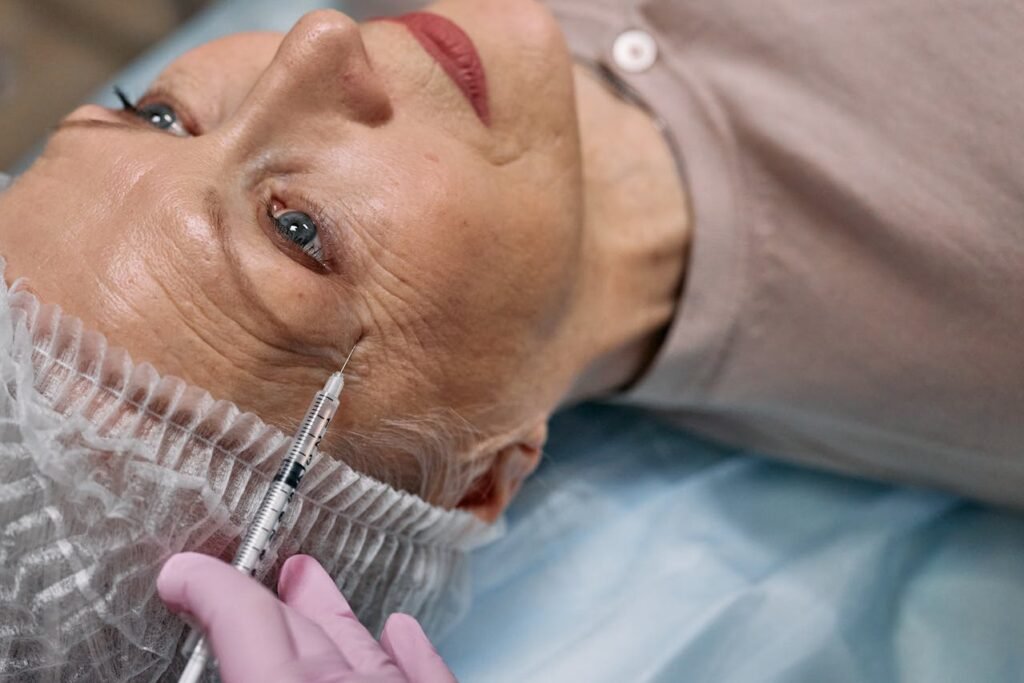
The American Academy of Dermatology reports that many patients notice results within three to seven days, with improvements generally lasting around three to four months. Individual experiences can differ.
Why You Should Avoid Rushing Into Additional Injections
Getting additional Botox too early can make it difficult to evaluate the actual treatment outcome.
There are several reasons to wait for an appropriate follow-up:
- Accurate assessment: Your provider can evaluate the complete response rather than judging early changes.
- Avoiding overtreatment: Additional injections may create excessive muscle relaxation or an unnatural appearance.
- Better facial balance: Waiting makes it easier to identify genuine asymmetry or persistent muscle activity.
- Personalized decisions: Your provider can determine whether an adjustment is necessary based on your results.
- Safer treatment planning: Allowing enough time between assessments supports more thoughtful treatment decisions.
The goal is to achieve a balanced result, not simply to add more Botox.
What Happens During a Botox Follow-Up Assessment?
A follow-up assessment is an opportunity for your aesthetic provider to review your results, discuss your experience, and determine whether any further treatment is appropriate.
At Collective Aesthetics, personalized treatment planning is an important part of our approach to Botox and Xeomin services.
During a follow-up consultation, your provider may consider the following:
1. Reviewing Your Initial Treatment
Your provider may review which facial areas were treated, the injection pattern, the amount of product used, and your original aesthetic goals.
This information helps establish whether the outcome is consistent with the initial treatment plan.
2. Evaluating Muscle Movement
Your provider may ask you to make different facial expressions, such as:
- Raising your eyebrows.
- Frowning or bringing your eyebrows together.
- Smiling naturally.
- Squinting gently.
These movements help reveal how the targeted muscles are responding and whether any areas require further evaluation.
3. Checking Facial Symmetry
Facial symmetry is another important consideration. Your provider may compare both sides of the face to assess eyebrow positioning, forehead movement, and the appearance of expression lines.
Small differences are normal because human faces are naturally asymmetrical. Treatment should respect these individual characteristics.
4. Discussing Your Satisfaction
Your experience matters just as much as the visible results.
Your provider may ask whether you are satisfied with the outcome, whether your facial expressions feel natural, and whether any particular area still concerns you.
This conversation helps ensure that any recommended adjustment aligns with your preferences and realistic treatment goals.
5. Determining Whether an Adjustment Is Necessary
After reviewing the results, your provider can recommend one of several options:
- No additional treatment because the results are satisfactory.
- Continued observation if the effects are still developing.
- A small, targeted adjustment when clinically appropriate.
- A different aesthetic approach if Botox is not suitable for the remaining concern.
A follow-up does not automatically mean another injection. Sometimes, the best decision is to allow the existing treatment to continue working.
Signs You May Benefit From a Botox Follow-Up
Not every patient requires an additional appointment, but certain concerns make a professional assessment worthwhile.
Consider scheduling a follow-up if you notice:
- Persistent movement in an area that was specifically targeted.
- Noticeable differences in muscle activity between the two sides of your face.
- Uneven-looking results after the initial treatment has fully developed.
- Areas that have not responded as expected.
- Concerns about whether your results match the treatment goals discussed during consultation.
It is important to distinguish between normal facial movement and an unexpected treatment outcome. Preserving some movement is often intentional, especially when the goal is a natural-looking appearance.
If you experience new or concerning symptoms after treatment, contact your treating provider rather than waiting for a routine follow-up. Seek immediate medical attention for difficulty swallowing, speaking, or breathing, or other serious symptoms.
Who Is a Good Candidate for a Botox Touch-Up?
A Botox Touch-Up Appointment: When Is It Appropriate? should always be considered on an individual basis. Eligibility depends on the patient’s treatment history, current results, health considerations, and aesthetic goals.
You may be suitable for an adjustment assessment if:
- You have already received Botox from a qualified provider.
- Enough time has passed for the initial results to develop.
- You have a specific concern involving the treated area.
- You are interested in subtle refinement rather than dramatic changes.
- Your provider determines that additional treatment is appropriate.
When a Touch-Up May Not Be Recommended
Additional injections may not be suitable in every situation.
Your provider may recommend waiting or avoiding further injections if:
- Your initial Botox results are still developing.
- Your muscles are already adequately relaxed.
- Additional treatment could create excessive muscle weakness.
- Your concern is unrelated to muscle movement.
- You have an active infection at a proposed injection site.
- You have a known hypersensitivity to a botulinum toxin product or another relevant medical contraindication.
Pregnancy, breastfeeding, certain neuromuscular conditions, medications, and other health considerations should also be discussed with your provider before treatment. A complete medical assessment helps determine whether treatment is appropriate.
How to Maintain Your Botox Results
Although Botox is temporary, patients can take practical steps to support their aesthetic results and make informed decisions about future treatments.
Follow Your Provider’s Aftercare Instructions
Aftercare instructions should always be followed. Your provider may recommend avoiding rubbing or massaging the treated areas and following specific activity restrictions immediately after treatment.
If you have questions about post-treatment care, contact your provider for guidance rather than relying on general advice.
Maintain a Consistent Treatment Schedule
Botox results gradually wear off as muscle activity returns. Many patients maintain their results with periodic treatments, often around every three to four months, depending on their individual response and treatment goals.
However, treatment frequency should never be based on a fixed schedule alone. Your provider should evaluate your facial movement and determine when another session is appropriate.
Communicate Changes in Your Results
Keep track of how your facial expressions and treated areas change over time. Sharing your observations during follow-up visits can help your provider make better-informed recommendations.
A Botox Touch-Up Appointment: When Is It Appropriate? is ultimately a decision based on your individual response, not simply the number of days since your injections.
Why Choose Collective Aesthetics for Botox in Miramar, FL?
Choosing an experienced aesthetic provider is an important part of your Botox journey. Proper assessment, thoughtful treatment planning, and attention to facial anatomy all contribute to a positive treatment experience.
At Collective Aesthetics, we offer personalized Botox and Xeomin treatments in Miramar, Florida, with an emphasis on natural-looking results and individualized care.
Our approach focuses on understanding your concerns before recommending treatment.
What Makes Our Approach Different?
- Personalized consultations: We take time to understand your aesthetic goals and treatment expectations.
- Experienced clinical leadership: Amparo Robles, MSN, FNP-BC, brings more than 15 years of medical experience to her work.
- Individualized treatment planning: Recommendations are based on your facial anatomy, muscle activity, and desired outcome.
- Natural-looking results: We prioritize balanced results while respecting your natural facial expressions.
- Ongoing guidance: We help patients understand treatment expectations, aftercare, and appropriate follow-up considerations.
Whether you are receiving Botox for the first time or returning for an assessment after previous injections, our team is committed to providing professional and patient-focused care.
Schedule Your Botox Consultation in Miramar, FL
If you are unsure whether your initial Botox treatment needs an adjustment, a professional assessment can help you understand your options.
At Collective Aesthetics, we welcome patients from :
Our team can evaluate your results, discuss your concerns, and help determine whether an additional treatment is appropriate for your needs.
Visit Collective Aesthetics
- Address: 6229 Miramar Pkwy Ste 7, Miramar, FL 33023
- Phone: (305) 528-3360
- Email: info@collective-aesthetics.com
Ready to discuss your Botox results? Schedule a consultation with Collective Aesthetics and receive personalized guidance from our aesthetic care team.
Related topic
- What is Botox? What You Need to Know Before Your First Injection
- Botox Procedure: What to Expect
- How Botox Works?
- Is Botox Bad for You? Debunking Myths and Exploring Facts
- Benefits of Botox treatments
- Botox for Beginners: What to Expect During Your First Botox Appointment
- Botox for Wrinkles: What Areas Benefit Most?
- Botox for Men: Why More Men are Choosing Cosmetic Injections
- How Botox Can Help with Migraines and TMJ
- potential side effects of Botox treatments
- Unlocking the Common Uses of Botox at Collective Aesthetics
- How Long Do Botox Last? A Guide to Treatment Longevity
- 5 Common Myths About Botox Treatments
- Common Uses of Botox
- Can Botox Cause Cancer? Myths vs. Facts for a Safer Choice
- What to Expect During and After Botox Treatment
- Can Botox Cause Headaches? Discover The Truth
- Can Botox Cause Hair Loss? Understanding the Effects on Hair
- Will Botox Help with Under Eye Bags? Expert Answers & Solutions
- Botox for Jowls – Cost, Placement, Side Effects & Benefits
- Botox for Crow’s Feet: Everything You Need to Know
- Botox for Jaw Clenching: Relief, Benefits & Expert Insights
- Is Botox Toxic? Exploring the Safety of Botox
- Botox vs. Dysport: Understanding Their Benefits and Differences