Discover the key differences between a VI Peel vs. a chemical peel to determine which treatment best fits your skin goals. Learn about benefits, cost, how each treatment works, and who’s a good candidate. At Collective Aesthetics in Miramar, we proudly serve clients from Miami, Pembroke Pines, Dania Beach, Hialeah, Miami Lakes, Miami Gardens, Cooper City, and Hallandale Beach.
Overview
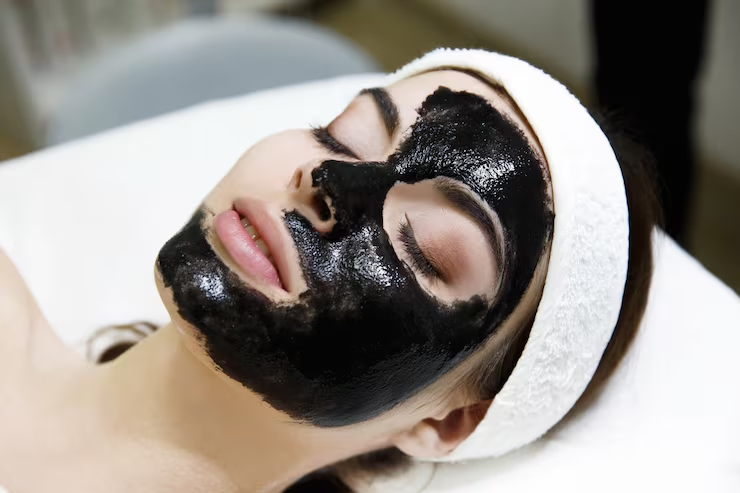
When exploring skin rejuvenation treatments, many clients ask about the difference between a VI Peel vs. chemical peel and which option will deliver the best results for their skin. Both treatments exfoliate the skin, boost cellular turnover, improve texture, and target common concerns such as acne scars, fine lines, and hyperpigmentation. However, each peel has distinct formulations, penetration levels, and benefits that make them ideal for different skin types and goals.
At Collective Aesthetics, we specialize in providing advanced skin treatments, including the VI Peel and a range of professional chemical peels, ensuring that each client receives a fully customized approach.
What Is a VI Peel?
The VI Peel is a medical-grade, medium-depth chemical peel known for its powerful yet gentle formulation. It combines ingredients such as
Unlike many traditional peels, the VI Peel is formulated to be safe for all skin tones, including sensitive and darker skin types, making it one of the most inclusive options available.
Key Benefits of a VI Peel
- Brightens hyperpigmentation and melasma
- Smooths fine lines and enhances skin texture
- Helps reduce active acne and acne scarring
- Improves sun damage
- Promotes collagen production
- Minimal downtime compared to deeper peels
Because of its versatility, many clients choose the VI Peel when comparing VI Peel vs chemical peel options, especially if they want visible results paired with low downtime.

What Is a Traditional Chemical Peel?
A chemical peel refers to any exfoliating treatment that uses acids to remove damaged layers of skin. They can be categorized into:
Deep Chemical Peels
- Use phenol or high-strength acids
- Penetrate deep into the dermis
- Transform skin dramatically
- Require significant downtime and medical supervision
Medium Chemical Peels
- Typically include TCA, glycolic acid, or Jessner’s solution
- Improve moderate wrinkles, acne scars, and discoloration
Light Chemical Peels
- Use alpha-hydroxy acids (AHAs) such as lactic or glycolic acid.
- Ideal for mild exfoliation, hydration, and subtler brightening
Chemical peels vary widely in strength, ingredients, and expected downtime, which is a major consideration when comparing a VI Peel vs. a chemical peel.
How They Work: VI Peel vs. Chemical Peel
How a VI Peel Works
The VI Peel is applied in layers and penetrates the skin gradually. Clients typically feel a mild warming sensation, but discomfort is minimal. The peel remains on the skin for several hours and begins to induce peeling after 48–72 hours.
How the VI Peel Works:
- It initiates controlled exfoliation of damaged skin cells.
- Stimulates collagen and elastin
- Breaks up pigment
- Clears pores and reduces inflammation
The peeling process usually lasts 5–7 days, revealing brighter, smoother, more refined skin underneath.
How Traditional Chemical Peels Work
Depending on the type of peel, a professional chemical peel may remove the uppermost layer of skin or penetrate deeper for more transformative results.
How Chemical Peels Work:
- Break down the bonds between dull, dead skin cells
- Encourage rapid cell turnover
- Reduce visible imperfections
- Promote long-term skin health
Light peels cause little to no flaking, while medium and deep peels may require up to 7–14 days of downtime.
Who’s a Good Candidate?
VI Peel Candidates
The VI Peel is excellent for clients looking for a safe and effective solution for multiple concerns simultaneously. You are a good candidate if you have:
- Hyperpigmentation or melasma
- Acne and acne scarring
- Uneven texture
- Fine lines
- Sun damage
- Sensitive or darker skin tones
Because of its gentle yet effective formula, many clients with diverse skin types lean toward the VI Peel when choosing between VI Peel and chemical peel treatments.
Chemical Peel Candidates
Chemical peels offer more flexibility in strength and treatment depth, making them ideal for:
- Mild to severe sun damage
- Deep-set wrinkles
- Texture irregularities
- Heavy discoloration
- Thick or oily skin
- Those seeking more dramatic results
Clients who need deeper correction rather than a versatile all-in-one solution may prefer a stronger chemical peel.
Cost Considerations: VI Peel vs Chemical Peel
Cost varies based on the type of peel, treatment depth, and number of sessions needed.
VI Peel
- Typically ranges from $250 to $400+
- Because of its versatility, many clients see noticeable results in one treatment.
- May be combined with boosters for enhanced results
Chemical Peels
Light chemical peels: $100–$150
Medium peels: $200–$500
Deep chemical peels: $800–$1500+
When clients compare VI Peel vs chemical peel, they often choose based on their desired results and available downtime rather than cost alone. At Collective Aesthetics, we provide customized recommendations to ensure each treatment matches your goals.

Results: What to Expect From Each Treatment
VI Peel Results
Most clients experience:
- Brighter, more even skin
- Reduced acne and tightened pores
- Noticeable glow
- Improved texture
- Smoother, youthful radiance
Visible improvement typically appears after one week.
Chemical Peel Results
Results depend on peel depth:
- Light peels → subtle radiance and smoother texture
- Medium peels → reduced discoloration and fine lines
- Deep peels → dramatic rejuvenation and long-lasting correction
Downtime: VI Peel vs Chemical Peel
VI Peel Downtime
- Peeling begins around day 2 or 3.
- Flaking lasts 3–5 days.
- Makeup can usually be worn after peeling subsides.
- Redness and sensitivity are mild.
Chemical Peel Downtime
Light peels:
- No downtime
- Light flaking
Medium peels:
- 5–7 days of redness and peeling
Deep peels:
- 10–14 days or more
- Requires strict aftercare
For clients with busy schedules, the downtime difference often influences their decision when choosing VI Peel vs. chemical peel.
VI Peel vs Chemical Peel: Which Option Is Best for You?
Both treatments are powerful tools for skin transformation. A VI Peel vs chemical peel comparison reveals that each offers unique benefits:
Choose a VI Peel If You Want:
- Safe treatment for any skin tone
- Versatility for multiple concerns
- A medium-depth peel with less downtime
- A gentle yet effective brightening solution
- Reduced acne and clearer pores
Choose a Chemical Peel If You Want:
- A lighter peel for maintenance
- A deeper peel for dramatic results
- A targeted treatment for wrinkles or significant sun damage
- A customized acid choice for your specific needs
- More aggressive correction for stubborn texture or pigmentation
At Collective Aesthetics in Miramar, we guide each client through a detailed skin consultation to determine the best approach. Whether you’re comparing VI Peel vs chemical peel for acne, pigmentation, or general rejuvenation, our providers ensure you receive the safest and most effective treatment.
What Makes Collective Aesthetics the Best Choice for Your Peel Treatment?
As a trusted medical aesthetics practice serving Miramar, Miami, Pembroke Pines, Dania, Hialeah, Miami Lakes, Miami Gardens, Cooper City, and Hallandale, we pride ourselves on delivering:
- Customized skin treatment plans
- Medical-grade products and protocols
- Safe, effective, and inclusive treatments for all skin types
- Expert providers with extensive skincare experience
- A warm, client-centered environment
We offer both the VI Peel and professional chemical peels, allowing you to choose the treatment that aligns perfectly with your goals.
Related Topics
- Benefits of Chemical Peels: Acne scars, anti-aging, sun damage.
- Types of Chemical Peels: Light, medium, and deep peels.
- Chemical Peel for Different Skin Types: Sensitive, oily, dry skin.
- Chemical Peel Recovery Time and Aftercare Tips.
- Chemical Peels vs. Laser Treatments: Differences and benefits.
- Best Chemical Peels for Acne and Scars.
- Risks and Side Effects of Chemical Peels.
- Chemical Peel Cost: Factors affecting pricing.
- Chemical Peels for Hyperpigmentation and Melasma.
- DIY Chemical Peels vs. Professional Peels.